

When I began my college journey, I often felt lost. Notes were scattered, the internet was overflowing with content, yet nothing truly matched the needs of university exams. I remember the frustration of not knowing what to study, or even where to begin.
That struggle inspired me to create Examopedia—because students deserve clarity, structure, and reliable notes tailored to their exams.
Our vision is simple: to make learning accessible, reliable, and stress-free, so no student has to face the same confusion I once did. Here, we turn complex theories into easy, exam-ready notes, examples, scholars, and flashcards—all in one place.
Built by students, for students, Examopedia grows with your feedback. Because this isn’t just a platform—it’s a promise that you’ll never feel alone in your exam journey.
— Founder, Examopedia
Always Yours ♥!
Harshit Sharma

Give Your Feedback!!
The Ganga Dynasty had a significant impact on the states of Odisha, Tamil Nadu, Karnataka, Kerala, and Andhra Pradesh. The Ganga Dynasty is separated into two parts: the Eastern Ganga Dynasty and the Western Ganga Dynasty. The Western Gangas ruled in Mysore state (Gangavadi) from about 250 to about 1004 CE. The Eastern Gangas ruled Kalinga from 1028 to 1434–35. The imperial Ganga kings ruled from Kalinga Nagara had vanquished the Kesaris and other ruling clans and seized control of a vast region stretching from the Ganga River in the north to the Godavari River in the south.
Ganga Dynasty
- The Ganga Dynasty‘s rulers were not only conquerors and capable administrators, but they were also great supporters of religion, religious institutions, art, and architecture, as evidenced by the construction of several exquisite temples.
- The skill of temple construction had achieved its pinnacle under their reign.
- The Ganga monarchs were devoted Shaivites at the beginning, as evidenced by a great number of copper plates and inscriptions.
- However, during the period of Anantha Varma Chodagangadeva, the Ganga kings’ creed has shifted from Shaivism to Vaishnavism.
- They gave vast tracts of land to Vedic academics and temples. Most gifts were given to Vishnu temples and Vaishnavite Brahmins.
- There are two divisions to the Ganga Dynasty: the Eastern Ganga Dynasty and the Western Ganga Dynasty.
Western Ganga Dynasty
- The Western Ganga Dynasty (350–1000 C.E.) was an important governing dynasty in ancient Karnataka, India, known as the Western Gangas to distinguish them from the Eastern Gangas, who reigned over current Orissa in following centuries.
- The Western Gangas established their reign during a time when various local clans asserted their independence due to the decline of the Pallava kingdom in South India, a geopolitical event frequently linked to Samudra Gupta‘s southern invasions.
- Despite being a minor kingdom in terms of territory, the Western Ganga has made significant contributions to the government, culture, and literature of contemporary south Karnataka.
- The Western Ganga monarchs were friendly to all faiths, but are most known for their sponsorship of Jainism, which resulted in the erection of monuments in sites like Shravanabelagola and Kambadahalli.
- Because the rulers of this dynasty supported the beautiful arts, Kannada and Sanskrit literature thrived.
Foundation of Western Gangas
- The Ganga dynasty was founded by Konkanivarman. He was known as Dharmamahadhiraja.
- The Gangas accepted Chalukya overlordship with the establishment of the imperial Chalukyas of Badami and fought for the cause of their overlords against the Pallavas of Kanchi. In 753 C.E,the Rashtrakutas of Manyakheta supplanted the Chalukyas as the dominating force in the Deccan.
- After a century of fight for independence, the Western Gangas ultimately acknowledged Rashtrakuta as their master and successfully fought alongside them against their adversaries, the Chola Dynasty of Thanjavur.
Shripurush
- Sripurusha (also known by titles such as Muttarasa, Rajakesari, Bhimakopa, and Ranabhajana) was a powerful king of the Western Ganga Dynasty who ruled from 726–788 CE. According to the Javali inscription, Sripurusha ruled for 62 years. He had marital relations with the Badami Chalukyas.
- An able warrior and scholar, he authored the Sanskrit work Gajasastra. He is known for significant irrigation projects, including the construction of a dam (Katta). He is also celebrated for both military achievements and Jain patronage.
Politics of the South
- The reign of Sripurusha Muttarasa was marked by conflicts with the Pallavas of Kanchi, Pandyas, and later the Rashtrakutas, who overthrew the Vatapi Chalukyas.
- In 731 CE, he defeated Pallava King Nandivarman II and assumed the title Permanadi. His capital was shifted to Manne (Manyapura) near Nelamangala, identified as a Ganga stronghold.
- He maintained good relations with the Chalukyas and helped them fight the Pallavas during the rule of Vikramaditya II. Later, he fought the Pandyas during the reign of Kirtivarman II, but suffered a reversal at Venbai.
- When the Rashtrakutas rose to power, though betrayed by the Nolambas, Sripurusha won several victories against Krishna I and occupied some Ratta territories. Resistance to the Rashtrakutas continued until relations were later normalized through martial alliances.
Religion and Patronage
- Sripurusha continued the Western Ganga tradition of supporting Jainism. Charters from his reign record land grants to monasteries such as the Lokatilaka Jinalaya and Kongeśvara Jina Caityālaya.
- They also mention Jain festivals such as Nandisvara and Sripanchami, which continued for centuries.
Literature and Legacy
- Sripurusha was a scholar-king who authored the Sanskrit treatise Gajasastra, focused on elephant management.
- His reign strengthened a dynastic tradition combining martial power, cultural advancement, and religious pluralism.
- The Doddahundi Nishidhi inscription, raised by his son Satyavakya, commemorates a Jain ritual site and reflects the dynasty’s religious identity.
Legacy
- Sripurusha was a capable ruler and a great warrior. He extended the boundaries of the Western Ganga kingdom and made it one of the most powerful kingdoms in southern India. He was also a patron of the arts and literature. He is remembered as one of the greatest kings of the Western Ganga dynasty.
Mahadeva Temple in Balligavi
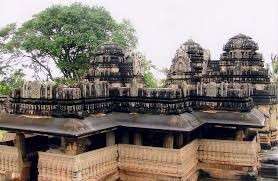
- The Mahadeva Temple is a Hindu temple dedicated to Shiva. It is located in Balligavi, Karnataka, India. The temple was built in the 8th century CE during the reign of Sripurusha. The temple is considered to be one of the finest examples of Chalukya architecture.
- The temple is built in the Dravidian style of architecture. It is made of soapstone and sandstone. The temple has a large central tower, which is surrounded by smaller towers. The temple is decorated with intricate carvings of Hindu deities and scenes from Hindu mythology.
- The Mahadeva Temple is a UNESCO World Heritage Site. It is one of the most popular tourist destinations in Karnataka.