

When I began my college journey, I often felt lost. Notes were scattered, the internet was overflowing with content, yet nothing truly matched the needs of university exams. I remember the frustration of not knowing what to study, or even where to begin.
That struggle inspired me to create Examopedia—because students deserve clarity, structure, and reliable notes tailored to their exams.
Our vision is simple: to make learning accessible, reliable, and stress-free, so no student has to face the same confusion I once did. Here, we turn complex theories into easy, exam-ready notes, examples, scholars, and flashcards—all in one place.
Built by students, for students, Examopedia grows with your feedback. Because this isn’t just a platform—it’s a promise that you’ll never feel alone in your exam journey.
— Founder, Examopedia
Always Yours ♥!
Harshit Sharma

Give Your Feedback!!
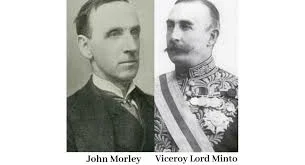
The Indian Councils Act (1909), also known as the Morley-Minto Reforms, was a set of reforms devised by and named after the Viceroy Lord Minto and the Secretary of State for India, John Morley. They both agreed that reforms were needed to appease both moderates and Muslims. They were preceded by two major events. This act amended the Indian Councils Acts of 1861 and 1892.
Background
- The reasonable intentions of Congress were not met by the Indian Councils Act of 1892.
- Lord Curzon carried out the division of Bengal in 1905. As a result, there was a massive uprising in Bengal.
- Following this, the British rulers realized that the Indian government needed to be improved.
- The Indian National Congress (INC) also advocated for more reforms and Indian self-government.
- Previously, Congress leaders were moderates, but radical leaders who advocated for more confrontational tactics were on the rise.
- For the first time, the Indian National Congress demanded home rule in 1906.
- Gopal Krishna Gokhale met with Morley in England to emphasize the importance of change.
- The Simla Deputation, led by Aga Khan, met Lord Minto in 1906 and presented their proposal for a separate electorate for Muslims.
- John Morley served in India’s Liberal government and worked to improve the country’s governance.
- The Indian Councils Act of 1909 was enacted in order to enlist the support of the Indian National Congress’s moderates and Muslims.