

When I began my college journey, I often felt lost. Notes were scattered, the internet was overflowing with content, yet nothing truly matched the needs of university exams. I remember the frustration of not knowing what to study, or even where to begin.
That struggle inspired me to create Examopedia—because students deserve clarity, structure, and reliable notes tailored to their exams.
Our vision is simple: to make learning accessible, reliable, and stress-free, so no student has to face the same confusion I once did. Here, we turn complex theories into easy, exam-ready notes, examples, scholars, and flashcards—all in one place.
Built by students, for students, Examopedia grows with your feedback. Because this isn’t just a platform—it’s a promise that you’ll never feel alone in your exam journey.
— Founder, Examopedia
Always Yours ♥!
Harshit Sharma

Give Your Feedback!!
Introduction
- The Hoysala dynasty was a South Indian empire that flourished from the 10th to the 14th centuries, primarily in what is now Karnataka. Initially vassals to the Western Chalukyas, they later established their own independent kingdom. The dynasty is renowned for its star-shaped temples, sophisticated administration, and rich literary tradition. The capital was first at Belur and later shifted to Halebidu (Dwarasamudra), which became a thriving cultural and religious center.
- The Hoysalas ruled large parts of modern-day Karnataka, Tamil Nadu, and Andhra Pradesh. They were patrons of Kannada and Sanskrit literature, Jainism, Vaishnavism, and Shaivism, and they played a critical role in shaping medieval South Indian art and architecture. The Hoysalas are especially remembered for their architectural brilliance, producing star-shaped temples with soapstone carvings that are UNESCO World Heritage Sites today.
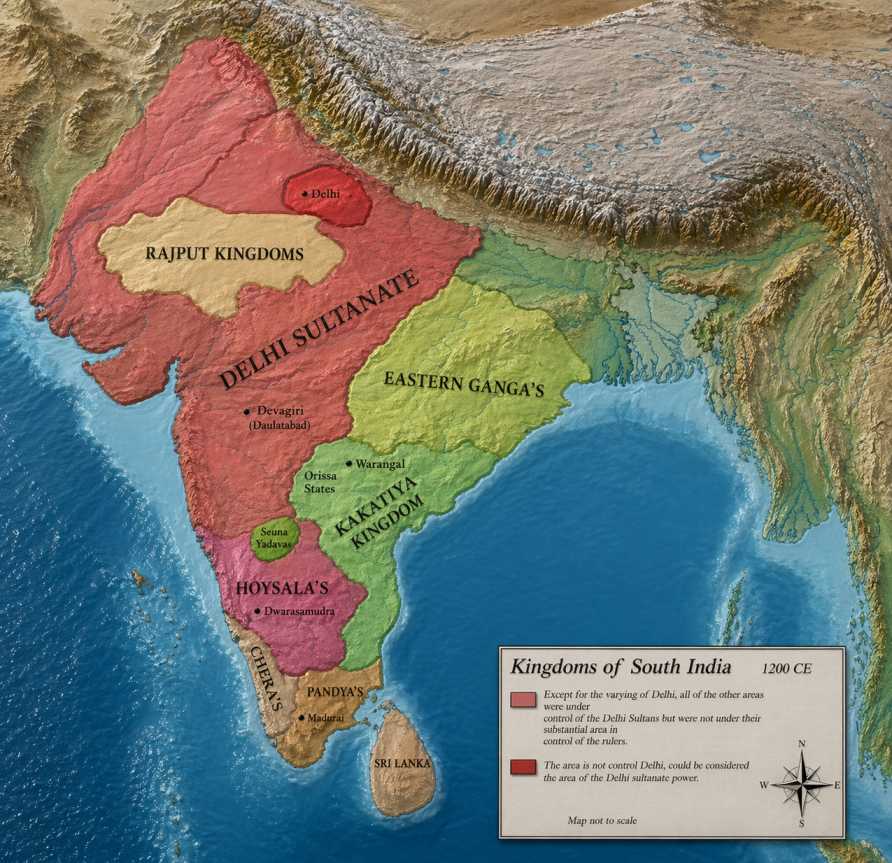
- The Hoysalas began as feudatories of the Western Ganga and later the Western Chalukya dynasties. Gradually, they asserted their independence and built a strong kingdom with Halebidu as their capital. Their rule was characterized by a balance of military strength and cultural patronage, enabling them to expand territories while encouraging art, literature, and religion.
Founder of the Hoysala Dynasty
- Historical Founder: Nripa Kama I (10th century CE), a vassal of the Western Ganga dynasty.
- Legendary Origin: “Hoy Sala!” (Strike Sala!) — the dynasty’s name comes from the mythical slaying of a tiger by Sala.
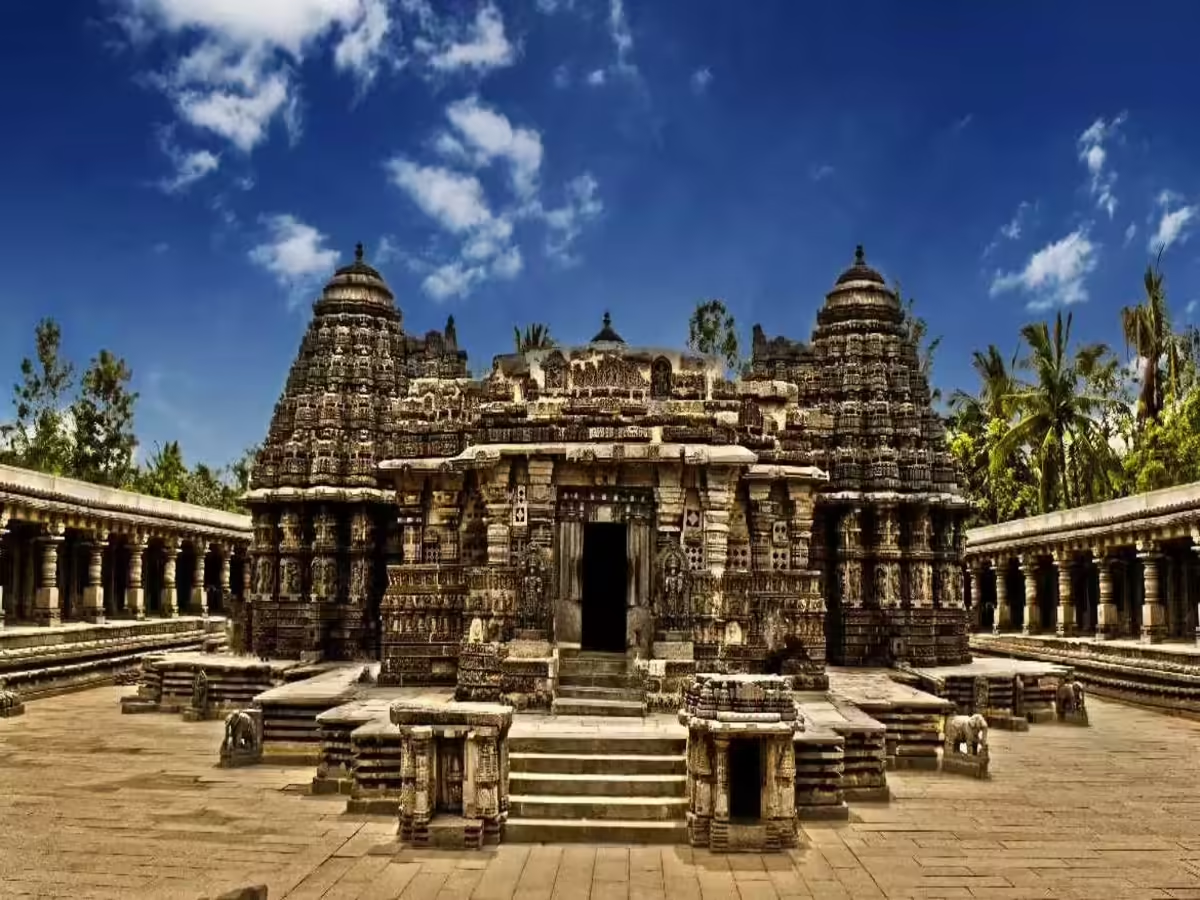
Fig: Hoysala dynasty
Early Power Base
Originated in the hill regions of the Western Ghats. Capitalized on weakening Chalukyan control to gain autonomy.
- First capital: Belur, later moved to Halebidu.
- Origin & Early History: The first of the dynasty, Nripa Kama I, was a vassal of the Western Ganga dynasty. Subsequent rulers such as Vinayaditya and Ereyanga expanded their influence while professedly being under the Chalukyas. This weak beginning set the stage for the future freedom of the dynasty. Nripa Kama I is historically credited as the founder of the Hoysala empire.
- Capital: Halebidu, Dwarasamudra, the 11th-century imperial capital, flourished with palaces and temples and market complexes, all symbols of Hoysala prosperity.
- Religion: Initially Jain patrons, the Hoysalas later turned to Vaishnavism under the influence of Ramanujacharya and still supported Shaivism and Jainism.
- Cultural impact: Hoysala culture nurtured Kannada and Sanskrit literature and created a peculiar temple style, influencing subsequent Vijayanagara architecture.
The Hoysala Empire in Karnataka unified diverse regions, transforming the state into a center of art, religion, and economic prosperity. A Hoysala dynasty map shows their territories spanning large parts of present-day Karnataka, extending into Tamil Nadu and Andhra Pradesh