

When I began my college journey, I often felt lost. Notes were scattered, the internet was overflowing with content, yet nothing truly matched the needs of university exams. I remember the frustration of not knowing what to study, or even where to begin.
That struggle inspired me to create Examopedia—because students deserve clarity, structure, and reliable notes tailored to their exams.
Our vision is simple: to make learning accessible, reliable, and stress-free, so no student has to face the same confusion I once did. Here, we turn complex theories into easy, exam-ready notes, examples, scholars, and flashcards—all in one place.
Built by students, for students, Examopedia grows with your feedback. Because this isn’t just a platform—it’s a promise that you’ll never feel alone in your exam journey.
— Founder, Examopedia
Always Yours ♥!
Harshit Sharma

Give Your Feedback!!
Mauryan Art and Architecture
Mauryan art is an art created between the 4th and 2nd Century BC under the Mauryan Empire, which was the first empire to control much of the Indian subcontinent. It marked a significant shift in Indian art from the use of wood to stone. It was a royal art that Mauryan rulers, particularly Ashoka, supported. The most notable survivors include pillars, stupas, and caverns.
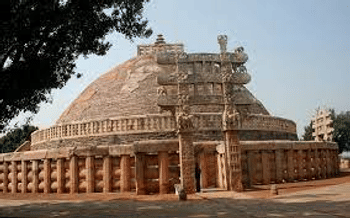
Mauryan Art and Architecture
Mauryan Art and Architecture (4th to 2nd Century BC)
- Around the 6th century BCE, religions of the Shramana tradition, such as Jainism and Buddhism, arose.
- In the 4th century BCE, the Mauryas had established themselves as a powerful force, and by the 3rd century, they had vast swaths of India under their authority.
- There were various religious activities at the period, including the worship of Yakshas and mother-goddesses. Despite this, Buddhism became the most popular religion.
- Only during the Mauryan period, after the Harappan civilization, did colossal stone sculpture and building development.
- Pillars, sculptures, rock-cut architecture, and structures like stupas, viharas, and chaityas served a variety of purposes. They are superb in terms of aesthetic quality as well as design and execution.
Mauryan Pillars and Sculptures
- This time saw a creative and stunning leap ahead in Indian stone sculpture; much of the prior work was likely made of wood and has now vanished.
- The best-known and greatest works of Ashoka are the artistically carved animal capitals that survive from several of his Pillars, particularly the Lion Capital of Sarnath, which is now India’s National Emblem.
- The pillars and capitals reflect court art, while some stone pieces and numerous smaller terracotta works represent surviving popular art.